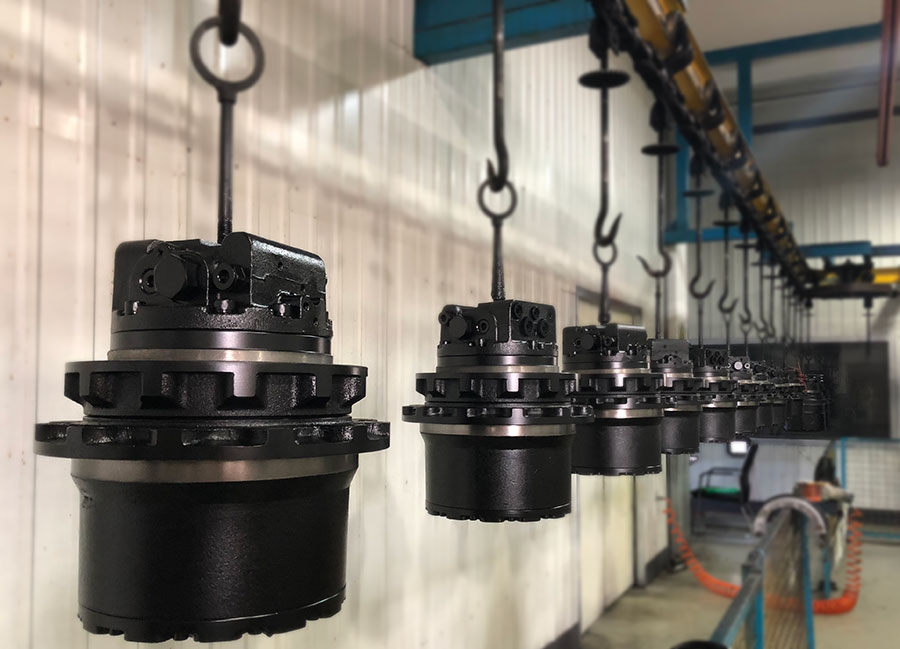
Normally called the closing drive shaft, This is actually the strong component that provides the ultimate, large-torque power with the planetary equipment program into the track sprocket. This shaft is actually a good piece of solid, significant-strength steel as it need to face up to the entire rotational power created by the drive without having twisting or breaking.
A lot of solutions are dispatched in just 24 several hours, and an get put by twelve:00 is often handed about to your courier even on the same working day! Each individual buy is dealt with by us independently, that is certainly why we provide professional tips and problems-free of charge Make contact with.
We provide assistance and professional assistance, so we motivate you to definitely Make contact with our experts. We is going to be pleased to reply any concerns you'll have in regards to the order of excavator elements.
Gear Reduction: The planetary gears Within the remaining drive reduce the speed in the rotational pressure though escalating torque.
To truly realize an excavator’s closing drive parts, we must look inside its casing. While it seems as a single device, it is a complex assembly of components Functioning in great sync. The diagram down below illustrates how these core components match with each other.
It acts as the ultimate url in the power transmission chain. The integrity of the output shaft is non-negotiable; If it fails, the relationship involving the motor along with the track is completely shed, Hence the track can’t transfer.
Hydraulic Fluid Input: The excavator’s primary pump sends higher-stress hydraulic fluid to the ultimate drive’s hydraulic motor.
Travel motors, closing drives, and hydraulic motors Each individual Professional Hydraulic Track Drive Motor Factory play crucial roles within the operation of heavy equipment, significantly excavators. Travel motors transform hydraulic force into mechanical Electricity to maneuver the tracks, although last drives minimize speed and increase torque to propel the equipment successfully.
Torque Multiplication: The equipment reduction appreciably enhances the torque output, important for relocating weighty masses.
The hydraulic pump delivers the fluid that actuates the travel motor. The travel motor is basically the hydraulic motor interfaces with the ultimate drive, giving the ability that the ultimate drive transforms into torque. That torque is transferred to your sprocket, which then turns the wheel and/or track. By this definition, the final drive is generally the planetary gear system that converts ability to torque. Closing Drive
Initial, evidently the phrase travel motor is accustomed to differentiate the motors to the Travel Motor wheels (or tracks) with the swing motor. During the graphic down below, you can see clearly see the swing motor at the middle of your vehicle, and can get a very good notion of where by its identify came from. The travel motor has become the critical parts in the hydraulic drive technique, that's summarized conceptually inside the figure below. In a standard hydraulic drive process, you do have a electrical power source (usually an interior combustion engine) that powers a hydraulic pump.
You'll find a tracked excavator final drive diagram mounted into the undercarriage body at the center of every track. It is the ingredient the drive sprocket is bolted on to.
Track Movement: This rotational pressure is transferred to the final drive, which then moves the tracks.
This is when the key to torque multiplication transpires. The planetary gear system is exactly what turns the quick, weak spin of the hydraulic motor into your sluggish, powerful rotation required to transfer tons of metal. It is made up of a few major equipment varieties: